
We ran our own audit on ourselves. Here's what it found.
The easiest way to explain what the six-layer audit produces is to show it. So we ran it on shesintheattic.com — a site launched in early 2026, three months old, actively being built. Including the gaps. Especially the gaps.
There is a particular kind of uncomfortable honesty involved in publishing your own audit. The findings are real. The gaps are real. The fix register is sitting there with our name on it.
That is also, precisely, the point. A methodology that only works on other people's sites is not much of a methodology. So here is what the full six-layer crawl found on 24 June 2026 — 33 URLs, one crawl, no flattering edits.
If you want to understand what the audit covers before reading the findings, the full methodology is explained here. The short version: six layers, each informing the next, from technical foundation through to commercial value.
Layer 1 — Archaeology
The technical foundation. Response codes, indexability, title and meta health, internal links, images. The things that have to work before anything else matters.
4xx errors
2
Both known. /the-craft.html and /migrations.html — internal links pointing to pages that don't exist yet.
Missing titles / H1s
0
Clean. Every page has a unique title and a single H1.
Duplicate titles
4
Section index pages sharing meta with individual posts. To fix.
Internal links
570
Across 33 pages. Healthy density. Distribution is the problem — see Layer 2.
The overall picture at this layer is clean. A new site with no 5xx errors, no missing titles, no broken redirects. The two 404s are known and fixable. The duplicate titles are a template issue, not a content problem.
Layer 2 — Architecture
Where the 570 internal links actually go. The distribution matters as much as the total. A site can have hundreds of links and still be starving its most important pages of authority.
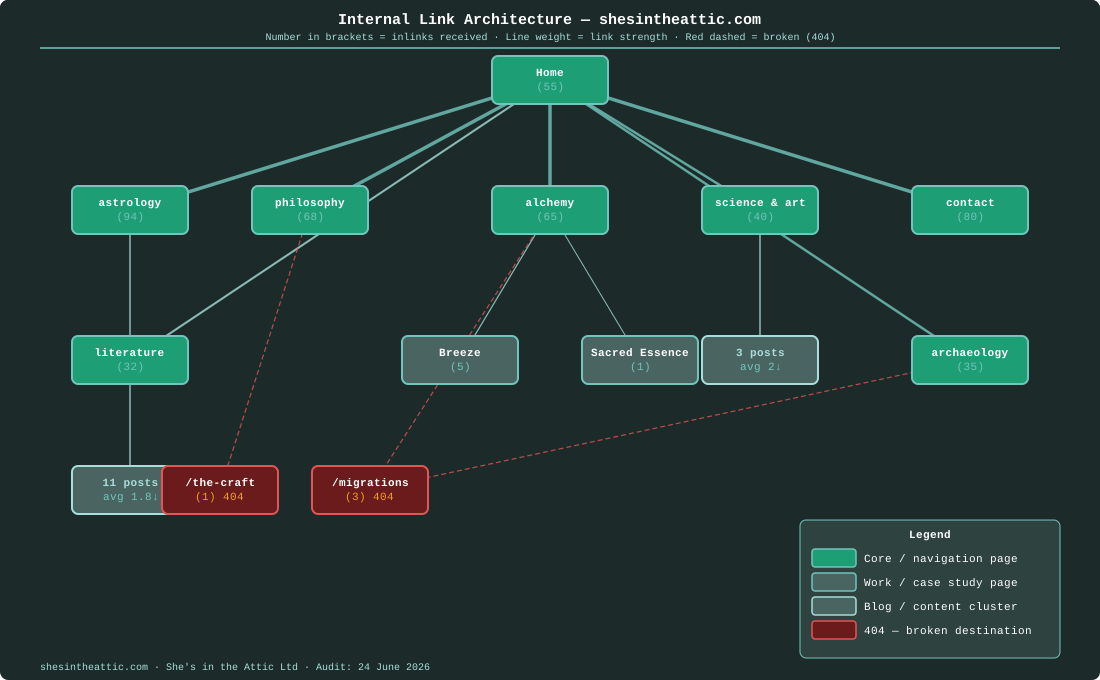
astrology.html has 94 inlinks. That is because every page on the site links to it via the primary navigation. contact.html has 80. Same reason. That is not a problem — that is the site working as intended.
the-basics-still-matter.html — the main piece of content on the site, the one that took the longest to build, the one that demonstrates the methodology most clearly — has 2 inlinks. Both from the homepage article grid.
Most of the blog posts have one inlink each. The section index pages link to them once. Nothing else does. Content that cannot be found from within the site cannot accumulate authority, regardless of how good it is.
The fix is not a redesign. It is three or four deliberate contextual links added to each section index page, and cross-links between related posts where topics overlap. It takes an afternoon.
Layer 3 — S.V.G.C.S
The entity and semantic layer. What the site actually says it is about, whether the right vocabulary is in place, and where the gaps are. This layer is still being built — the full extraction module runs NLP against crawled page content and compares semantic coverage against competitors.
Manual review gives a provisional picture: strong coverage on Technical SEO, AI Search Visibility and GA4. Thin on Semantic Architecture. Missing entirely: Schema/JSON-LD across all pages, a migrations page that is referenced by four internal links but does not exist, and entity clustering between related posts.
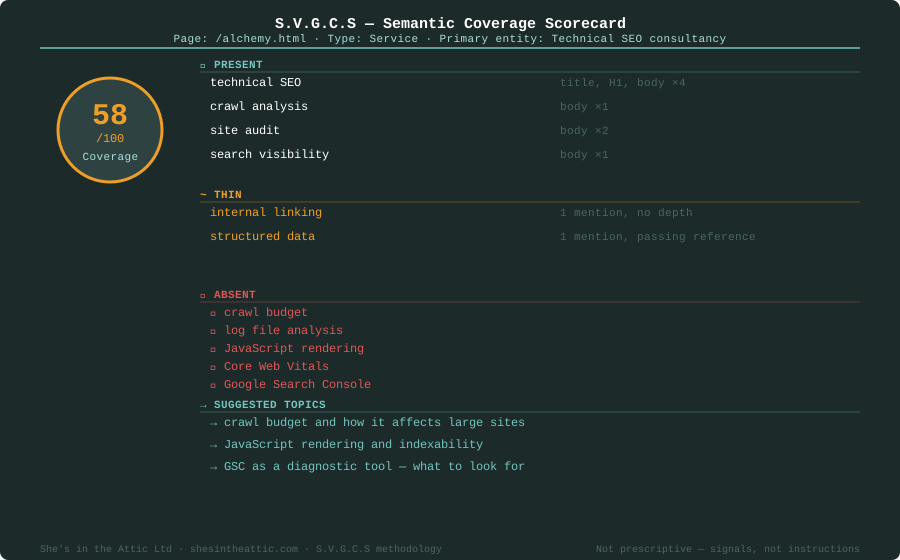
The scorecard format is the output of the full extraction. Present terms, thin terms, absent terms, and suggested topics — not word count, not keyword density, but semantic completeness relative to what the page type and topic cluster actually requires.
Full extraction is the next session. The findings will be added to the audit document when complete.
Layer 4 — Readability
The accessibility tree audit. How machines read the pages — which is the same way a screen reader does, not the way a human with a working browser does.
Overall score
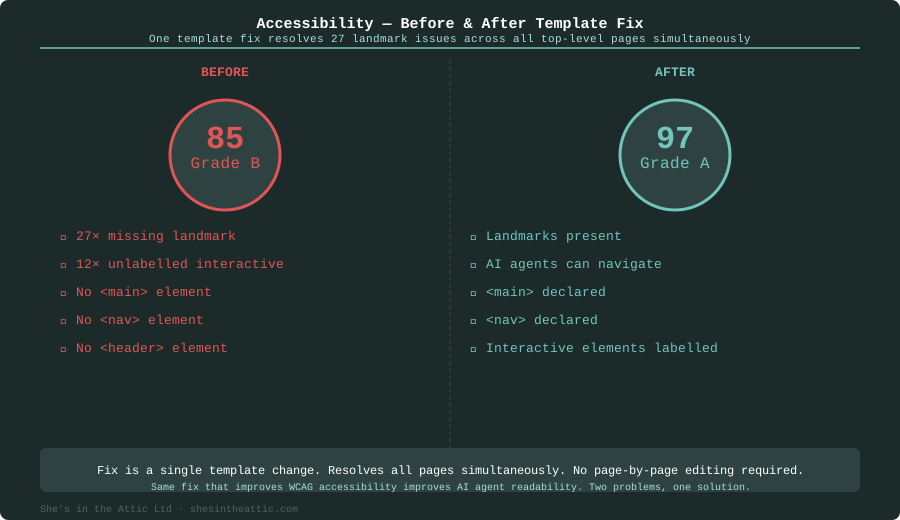
93 / 100 — Grade A
Inner pages (astrology posts, work pages, science-and-art articles) all score 100. Top-level pages score 85 due to a template-level issue — missing semantic landmarks. One fix resolves all 27 instances simultaneously. The contact page scores 82 and gets fixed first.
The finding that matters here: the same structural issues that prevent screen reader users from navigating the page also prevent AI agents from understanding it. Missing <main>, <nav> and <header> landmarks are not just a WCAG compliance problem. They are a machine readability problem. Two problems, one fix.
Layer 5 — Visibility
Where the site actually appears when people search. Two data sources: Google Search Console and Brave Search.
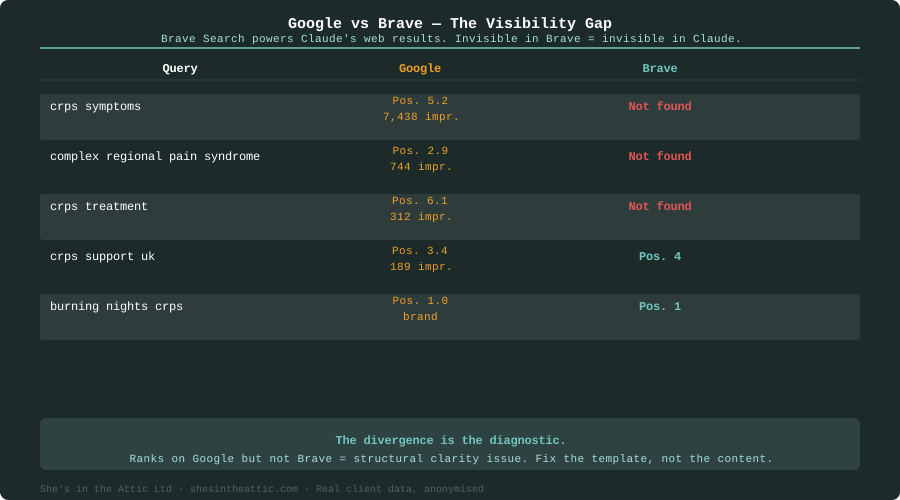
For shesintheattic.com specifically: zero Brave visibility across all 12 tracked queries. This is the correct and expected result for a site three months old. Brave has not yet crawled it.
The important data point is in the query terms. "svgcs seo" and "six layer seo audit" are terms no other site uses. When Brave indexes the domain, those queries will return shesintheattic.com exclusively. That is not an accident — it is what building a proprietary methodology produces.
GSC: zero clicks, zero impressions over 90 days. Also expected. The blog post was published days before the crawl. The baseline is established. Re-run in four weeks.
Layer 6 — Science & Art
GA4. The commercial intelligence layer. Where visitors are coming from, which pages they engage with, and whether the momentum is moving in the right direction.
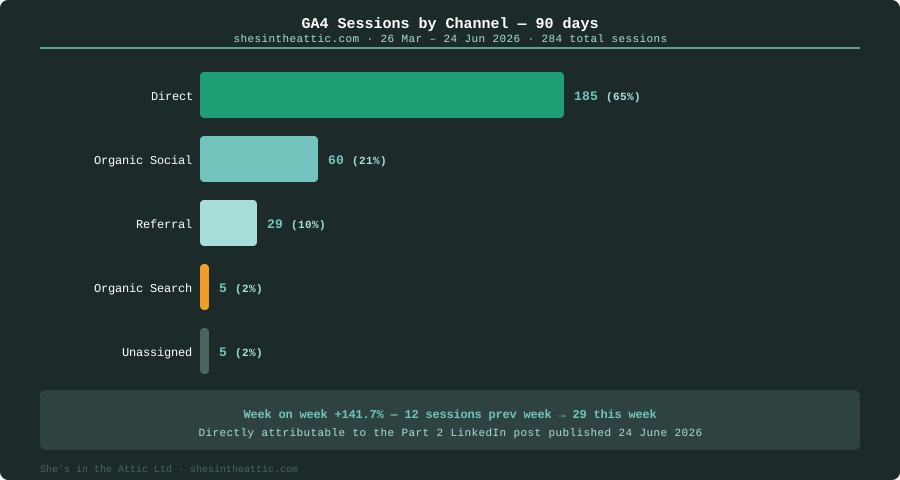
Total sessions (90 days)
284
New site, no paid activity. All organic.
Week on week
+141.7%
12 sessions prev week → 29 this week. Directly attributable to LinkedIn Part 2 post.
Direct traffic
65%
LinkedIn audience typing the URL directly. Brand awareness working.
Organic Search
2%
5 sessions. Expected for a new site. Will grow as Google indexes the blog post.
One finding worth noting: /astrology/004.html — "Work Is A Four Letter Word" — has 54 sessions despite being one of the earlier posts with minimal internal linking. Worth investigating where that traffic is coming from. It may have been shared somewhere that didn't pass referrer data.
The fix register
Everything identified across all six layers, prioritised. The full version is in the audit document. The headlines:
HIGH: Two 404s (fix the broken internal links). Zero structured data across all pages (add Article and Organization schema). No llms.txt (create it — highest single impact for AI discoverability). Blog posts critically underlinked (add contextual cross-links from section pages).
MEDIUM: Template landmark fix (one change, 27 issues resolved). robots.txt AI bot rules (add GPTBot, ClaudeBot, PerplexityBot). Nine titles over 60 characters. Cookie consent pop-up reappearing on every page visit.
LOW: Migrations page (write it — the links are already there waiting for it). Philosophy "On working together" section. Astrology posts 001 and 002.
None of this is surprising. It is a three-month-old site built by one person alongside client work. The gaps are the expected gaps. What the audit does is name them, prioritise them, and make it clear which ones are blocking performance and which ones can wait.
The full audit document
The complete findings — all six layers, with data tables, the internal link architecture diagram, GA4 channel breakdown, fix register and re-crawl commands — are available as a downloadable document. This is what the deliverable looks like.
Six layers. 33 URLs. Real data. Including the bits that need fixing. 9 sections, fully annotated, produced using the She's in the Attic audit methodology.
If you want to know what this looks like for your site — the audit is a service. It is not free. But if the question matters, the contact form is here.
Further reading: The basics still matter. We just made them visible. — the full methodology behind the six layers. And the GA4 AI Traffic Tracking Guide covers the commercial layer in detail.